
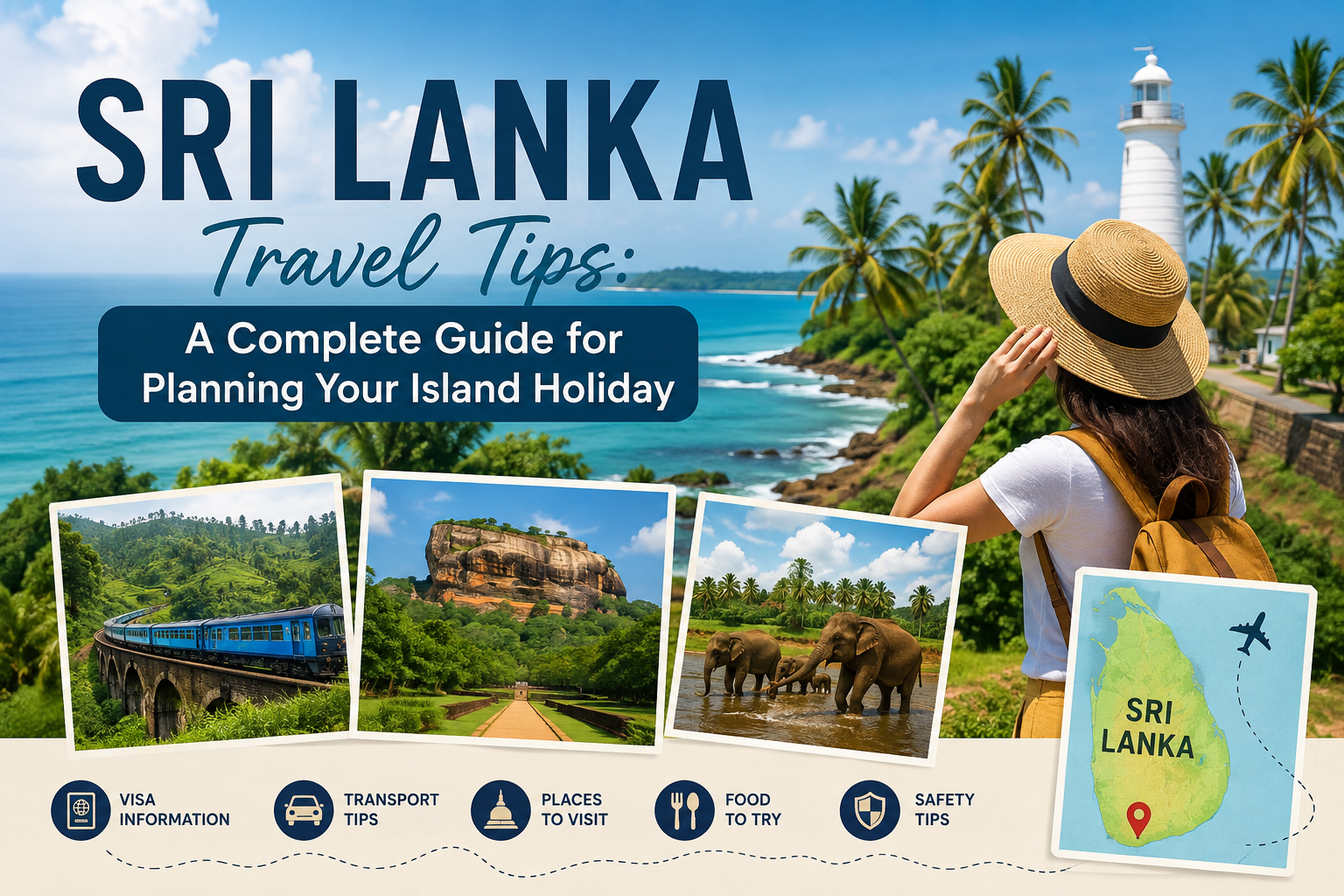
Sri Lanka is a destination where beaches, ancient heritage, misty mountains, wildlife, tea plantations and vibrant local culture come together on one beautiful island. From exploring Colombo and the historic streets of Galle to enjoying the cool landscapes of Nuwara Eliya and visiting the cultural treasures of Kandy and Sigiriya, a Sri Lanka holiday can offer a surprisingly diverse travel experience.
For Indian travellers, Sri Lanka is also an attractive international getaway because of its relatively short travel distance, tropical climate, distinctive culture and variety of experiences. However, planning the right route is important. The island has different weather patterns across its regions, so choosing destinations according to the season can make a major difference to your trip.
FlyTour currently features a 6 Days / 5 Nights Sri Lanka Paradise Tour, covering the country's contrasting landscapes and experiences. Whether you are considering a package tour or planning a customised holiday, these Sri Lanka travel tips will help you prepare for a comfortable and memorable journey.
Why Visit Sri Lanka?
Sri Lanka packs an impressive variety of experiences into a relatively compact island. You can begin your trip in a lively city, travel through green tea country, visit ancient monuments and finish beside a tropical beach—all within the same holiday.
The official Sri Lanka Tourism website highlights experiences ranging from wildlife and beaches to cultural attractions and tea-country landscapes. Sigiriya, Yala National Park and Mirissa are among the country's popular attractions.
One of the biggest advantages of travelling around Sri Lanka is the combination of experiences. A traveller interested in history can explore ancient cities and temples, while nature lovers can visit national parks and tea plantations. Couples can enjoy scenic resorts and beaches, families can explore cultural and wildlife attractions, and adventure seekers can try activities such as surfing, hiking and water sports.
Sri Lanka's coastline is another major attraction. The country has around 1,600 km of coastline, with beaches and water-based experiences available in different parts of the island.
Best Places to Visit in Sri Lanka
Colombo
Colombo is a convenient starting point for many Sri Lanka holidays. The capital area combines modern shopping and dining with colonial architecture, temples, markets and coastal views.
Spend some time exploring the city's important attractions before travelling to other parts of the island. Colombo can also be useful as your final stop if you want to shop for souvenirs before your return flight.
Kandy
Kandy is one of Sri Lanka's most culturally significant destinations. Located among green hills, the city is famous for the Temple of the Sacred Tooth Relic and its beautiful surroundings.
The city is particularly appealing to travellers who want to experience Sri Lankan culture and traditions. Give yourself enough time to explore the temple area and enjoy the atmosphere around Kandy Lake.
Nuwara Eliya
If you want a break from Sri Lanka's tropical heat, include Nuwara Eliya in your itinerary. Located in the central highlands, the region is known for its cool climate, green hills and tea plantations.
The higher altitude means temperatures can be considerably cooler than in the lowlands. Sri Lanka's Ministry of Foreign Affairs notes that temperatures in the highlands can average around 18°C compared with approximately 27.5°C in the lowlands.
This is why carrying a light jacket or warm layer is one of the most useful Sri Lanka travel tips, even if most of your holiday is spent near the coast.
Sigiriya
Sigiriya is one of Sri Lanka's most famous attractions and a highlight for first-time visitors. The ancient rock fortress rises dramatically above the surrounding landscape and offers spectacular views.
If you plan to climb Sigiriya, start early in the day. The heat can become uncomfortable later, particularly during warmer months. Carry water, wear comfortable footwear and allow sufficient time for the climb and sightseeing.
Galle
Galle offers a completely different atmosphere from Colombo. Its historic fort area features colonial architecture, narrow streets, cafés, boutiques and views of the Indian Ocean.
Galle is an excellent destination for travellers who enjoy history, photography and relaxed exploration. Walking around the fort area in the late afternoon can be particularly enjoyable.
Bentota
Bentota is a popular choice for travellers looking for beaches and leisure activities. It can be included in a family holiday or couple's itinerary when you want time to relax after visiting cultural attractions.
Depending on seasonal conditions, coastal destinations can also offer activities such as boating and water sports.
Yala National Park
Wildlife enthusiasts should consider adding Yala National Park to their itinerary. Sri Lanka Tourism describes Yala as one of the country's major wildlife destinations and notes that it is home to Asian elephants, leopards and many bird species.
A safari can add an exciting element to a Sri Lanka holiday, especially for families and nature lovers.
Mirissa
Mirissa is known for its beautiful coastal setting and whale-watching opportunities. It is particularly attractive for travellers who want to combine a beach stay with marine experiences.
The best time for coastal activities depends heavily on the monsoon affecting the region, so check seasonal conditions before finalising your itinerary.
Best Time to Visit Sri Lanka
One of the most important Sri Lanka travel tips is to choose your destination according to the weather rather than assuming that the entire country has the same climate.
Sri Lanka experiences two major monsoon systems, which affect different parts of the island at different times. According to Sri Lanka Tourism, the southwest monsoon generally affects the southwest from May to September, while the northeast monsoon influences other areas during the opposite part of the year.
For many popular destinations on the west and south coasts, including beach areas around Bentota, Galle and Mirissa, December to March is generally a favourable period. The official tourism website also notes that the southwest coast tends to have calmer seas from November to March.
For the east coast, including destinations such as Trincomalee and Arugam Bay, conditions are generally more favourable during the period when the southwest monsoon affects the west and south.
The central highlands have their own climate patterns, so Nuwara Eliya can feel much cooler than coastal destinations at almost any time of year.
Sri Lanka Weather by Season
December to February: A popular period for the west and south, with favourable conditions for beaches and sightseeing.
March to April: A transitional period that can bring warm temperatures and occasional showers.
May to September: The southwest receives more rainfall, while the east and northern areas can offer better conditions for certain types of travel.
October to November: The inter-monsoon period can bring showers across different parts of the island, so flexible travel plans can be useful.
Sri Lanka Tourism currently describes the country as having four climate seasons influenced by two monsoon periods.
Sri Lanka Travel Tips for Choosing Your Itinerary
Avoid trying to cover every major destination during a short holiday. Although Sri Lanka is geographically compact, road journeys between destinations can take longer than expected because of terrain and traffic.
For a 5-6 day holiday, a balanced itinerary could combine Colombo, Kandy, Nuwara Eliya and one coastal destination. This gives you a mix of city sightseeing, culture, mountains and beaches without making the trip feel like a continuous road journey.
For a longer holiday of around 8-10 days, you can add destinations such as Sigiriya, Galle, Yala or Mirissa.
A sample route could look like:
Day 1: Arrival and Colombo sightseeing
Day 2: Colombo to Kandy
Day 3: Kandy to Nuwara Eliya
Day 4: Nuwara Eliya sightseeing and onward travel
Day 5: Coastal destination and leisure
Day 6: Return journey and departure
The exact itinerary should be adjusted according to flight timings, hotel locations, weather and the attractions you want to prioritise.
Sri Lanka Visa and Entry Tips for Indian Travellers
Visa requirements can change, so always check the official Sri Lankan immigration information before travelling.
As of August 2026, Sri Lanka's Department of Immigration and Emigration states that nationals of 40 countries, including India, are eligible for a tourist ETA free of charge for 30 days under the current scheme. However, travellers from these countries are still required to obtain an Electronic Travel Authorization before arrival.
The immigration department also states that the earlier announcement making ETA mandatory from October 15, 2025 was revoked, while ETA and other visa procedures continued under the existing process.
Because immigration rules can change, do not rely on old travel blogs or social media posts. Use the official Sri Lankan immigration website and ETA system when checking your current requirements. The immigration department specifically advises travellers to use the official ETA website for applications and payments.
Before departure, keep your passport, visa/ETA documentation, return or onward flight information, hotel details and other required travel documents easily accessible.
What to Pack for Sri Lanka
Packing for Sri Lanka depends on the destinations and season, but lightweight and breathable clothing is a good starting point.
Your basic packing list should include:
- Comfortable cotton or quick-dry clothes
- Comfortable walking shoes
- Sandals or flip-flops
- Sunglasses
- Sunscreen
- Hat or cap
- Reusable water bottle
- Basic medicines and personal essentials
- Light rain jacket or compact umbrella
- Light sweater or jacket for hill stations
- Power bank
- Universal travel adapter
- Copies of important travel documents
- Small backpack for day trips
If you plan to visit temples, carry clothing that covers the shoulders and knees. Modest clothing is particularly important when visiting religious and cultural sites.
Sri Lanka Travel Tips for Temples and Religious Sites
Sri Lanka has a strong Buddhist cultural heritage, and visitors should be respectful when entering temples and religious places.
Remove footwear where required and follow signs or instructions from temple staff. Avoid wearing clothing that is excessively revealing at religious sites.
Photography rules can vary. Some areas may restrict photography or photography with religious statues, so check the signs before taking pictures.
A respectful approach will make your cultural experience more meaningful while also helping you avoid unnecessary misunderstandings.
Getting Around Sri Lanka
Sri Lanka offers several transportation options, including private vehicles, taxis, trains and buses.
For tourists travelling between multiple destinations, a private vehicle with a driver can be convenient because it allows greater flexibility with stops and sightseeing.
The railway network is particularly popular for scenic journeys through the central highlands. If a train journey is an important part of your trip, check schedules and seat availability in advance.
Buses can be economical, but they may not always be the most convenient option for travellers with limited time.
One of the most important transport-related Sri Lanka travel tips is to avoid planning too many activities on the same day. Travel time can vary because of traffic, road conditions and weather.
Sri Lankan Food You Should Try
Food is an important part of the Sri Lankan travel experience. The cuisine is known for rice, curries, spices, coconut-based dishes and fresh ingredients.
Some foods you may want to try include:
- Rice and curry
- Hoppers
- String hoppers
- Kottu roti
- Dhal curry
- Pol sambol
- Seafood dishes
- Sri Lankan tea
- Tropical fruits
If you do not eat spicy food, tell the restaurant or hotel staff beforehand. Sri Lankan cuisine can be significantly spicier than some visitors expect.
For travellers with food allergies or dietary restrictions, communicate your requirements clearly before ordering.
Money and Budget Tips
Sri Lanka uses the Sri Lankan Rupee (LKR). Cards are accepted at many tourist establishments, but carrying some local currency is still useful for smaller shops, local transport, markets and places where card payments may not be available.
Avoid exchanging large amounts of money at the first available counter without checking the exchange rate. Use authorised exchange facilities and keep your receipts when appropriate.
Create a daily budget covering:
- Accommodation
- Transportation
- Meals
- Entrance fees
- Activities
- Shopping
- Emergency expenses
A package tour can make budgeting easier because major components such as accommodation and planned sightseeing may be arranged in advance.
Sri Lanka Travel Tips for Staying Safe
Sri Lanka is a popular tourist destination, but normal travel precautions are still important.
Keep your passport and valuable documents secure. Avoid displaying large amounts of cash in crowded places and keep an eye on your belongings at busy markets, railway stations and tourist attractions.
Use reputable transportation providers and be cautious when accepting unsolicited offers for tours or activities.
At beaches, always pay attention to local warnings and water conditions. Ocean conditions can change depending on the season and monsoon.
For wildlife experiences, follow the instructions of guides and park authorities. Never approach wild animals or attempt to feed them.
Sri Lanka Tourism lists 1912 as its tourism hotline and 1990 for ambulance services.
Respect Local Culture
Responsible tourism is an important part of enjoying Sri Lanka.
Dress appropriately at religious sites, ask permission before photographing people when appropriate, avoid damaging historical structures and dispose of waste responsibly.
Support local businesses by purchasing locally made products and eating at reputable local establishments.
When visiting natural areas, avoid leaving plastic waste behind. Sri Lanka's beaches, forests, mountains and wildlife areas are among the country's biggest attractions, and protecting them benefits both residents and future travellers.
Sri Lanka Travel Tips for Families
Sri Lanka can be a rewarding destination for families because one trip can include beaches, wildlife, cultural attractions and scenic landscapes.
However, avoid creating an overly packed schedule. Children may become tired during long road journeys, so include breaks between major sightseeing days.
Choose hotels with family-friendly facilities and check whether your preferred activities are suitable for children.
If travelling with young children, keep snacks, water, sunscreen, basic medicines and a change of clothes in your day bag.
Sri Lanka Travel Tips for Couples
Couples can create a balanced itinerary by combining sightseeing with relaxation.
Spend a few days exploring cultural attractions and hill-country landscapes before moving to a beach destination. Sunset walks, scenic train journeys, tea plantations and coastal stays can all add memorable experiences to a romantic holiday.
Rather than visiting too many destinations, select a few places that match your interests and spend enough time enjoying each one.
Common Mistakes to Avoid in Sri Lanka
1. Ignoring the monsoon season:
Do not assume that every part of Sri Lanka has identical weather.
2. Packing only summer clothes:
Hill stations such as Nuwara Eliya can be much cooler.
3. Planning too many destinations:
Long road journeys can make an itinerary exhausting.
4. Forgetting temple dress requirements:
Carry modest clothing for religious sites.
5. Not checking current visa information:
Entry requirements can change, so use official immigration sources.
6. Carrying no local currency:
Cards are useful, but cash remains convenient in many situations.
7. Booking activities without checking weather:
Beach and outdoor activities can be affected by seasonal conditions.
8. Treating every region the same:
Choose destinations based on the weather and your interests.
Why Choose a Sri Lanka Tour Package?
Planning an international holiday independently can involve arranging flights, hotels, transfers, sightseeing and day-to-day transportation separately. A package can simplify many of these decisions.
FlyTour currently lists its Sri Lanka Paradise Tour as a 6-day/5-night package, with the itinerary designed around Sri Lanka's varied attractions. A well-planned package can be particularly useful for first-time visitors who want to explore multiple destinations without spending their holiday coordinating every transfer. When comparing packages, do not look only at the headline price. Check the duration, hotel category, sightseeing inclusions, transportation, meals, entrance fees, transfers and cancellation conditions.
Final Sri Lanka Travel Tips for a Memorable Holiday
Sri Lanka is best experienced at a comfortable pace. Instead of trying to tick every attraction off your list, choose experiences that match the type of holiday you want.
For nature lovers, include wildlife parks and scenic landscapes. For culture enthusiasts, spend more time around Kandy, Sigiriya and other heritage attractions. Beach lovers can focus on the southern, western or eastern coastline depending on the season. If you enjoy cooler weather, the central highlands around Nuwara Eliya are worth including.
Most importantly, check the weather before finalising your route, keep your travel documents organised, pack according to the regions you will visit and respect local customs.
With the right planning, a Sri Lanka tour package can combine culture, nature, adventure, beaches and relaxation in one unforgettable island holiday. FlyTour's Sri Lanka tour options provide a convenient starting point for travellers looking to explore this diverse destination with a planned itinerary.
Sri Lanka is not simply a beach destination. It is a place where ancient heritage, green mountains, wildlife, tea gardens, tropical coastlines and warm hospitality come together. Plan your route carefully, travel responsibly and leave enough time to enjoy the journey—not just the destinations.
Comments (0)
Leave a Comment