
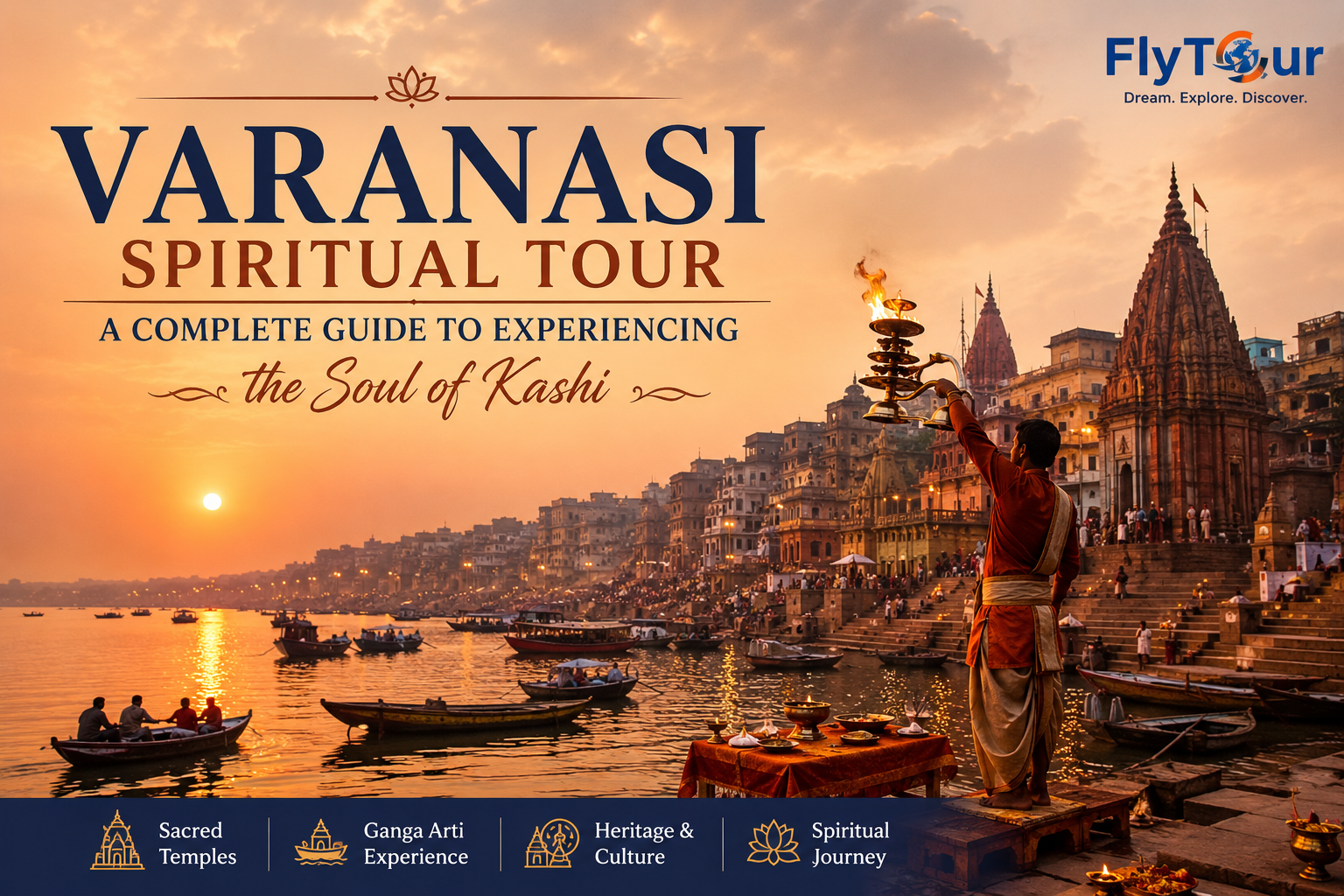
There are cities you visit, and there are cities you feel. Varanasi belongs firmly to the second category. Also known as Kashi or Banaras, it is one of the oldest continuously inhabited cities in the world, and for millions of pilgrims, it is not just a destination but a homecoming of sorts, a place where the Ganga, centuries of ritual, and everyday life all meet on the same stone steps.
If you're planning a Varanasi spiritual tour, this guide walks you through everything worth knowing: what to see, how to sequence your days, what to expect from the ghats and temples, and practical details on transport, stay, and timing that make the difference between a rushed visit and a genuinely moving one.
Why Varanasi Deserves More Than a Day Trip
It's tempting to treat Varanasi as a quick stopover between other destinations, but the city rewards a slower pace. A well-structured 3 Days / 2 Nights itinerary is usually enough to cover the essentials without feeling hurried: a sunrise boat ride along the ghats, darshan at the Kashi Vishwanath Temple, the evening Ganga Aarti at Dashashwamedh Ghat, a walk through the old city's narrow lanes, and a half-day excursion to Sarnath, the site of Buddha's first sermon, just a short drive away.
Spreading these across three days rather than cramming them into one lets you experience Varanasi at its two most atmospheric moments, sunrise and sunset, rather than seeing it only in the crush of midday heat and crowds.
The Sunrise Boat Ride: Varanasi's Quietest, Most Beautiful Hour
Nothing captures the rhythm of Varanasi quite like an early morning boat ride along the Ganga. As the rowboat glides past ghat after ghat, the city wakes up around you: priests setting up for morning rituals, people performing yoga on the steps, temple bells beginning to ring, and the first light catching the sandstone facades that line the riverfront.
This is typically a 45 to 60 minute experience, best done as early as possible, before the heat sets in and the ghats fill up. It's also, for many first-time visitors, the moment Varanasi's reputation as a spiritual city stops being an abstract idea and starts feeling real.
Kashi Vishwanath Temple: The Heart of the Pilgrimage
At the centre of any Varanasi spiritual tour is the Kashi Vishwanath Temple, home to one of the twelve Jyotirlingas and among the most revered Shiva temples in India. Following the redevelopment of the Kashi Vishwanath Corridor, the temple is now directly connected to the Ganga, making the walk from the riverfront to the sanctum far more accessible than it once was.
Darshan timings and crowd levels vary through the day, so it helps to plan your visit around quieter windows rather than arriving at peak hours. Travellers who want a faster, more comfortable experience often opt for Sugam Darshan, a paid fast-track option booked through the temple's official portal. It's worth noting that a valid government photo ID, such as Aadhaar, a Voter ID, or a passport, is mandatory for Sugam Darshan bookings, and electronics like phones and cameras aren't permitted inside the sanctum, though lockers are available nearby.
If temple darshan is the single most important part of your trip, it's worth looking specifically for an itinerary built around Kashi Vishwanath, since a general spiritual tour and a darshan-focused one can differ meaningfully in pacing and priority.
Ganga Aarti at Dashashwamedh Ghat: The Evening You'll Remember
If the sunrise boat ride is Varanasi's quiet hour, the Ganga Aarti at Dashashwamedh Ghat is its most theatrical one. Every evening, usually starting around sunset, priests perform a synchronized fire ceremony with large brass lamps, accompanied by chanting, bells, and drums, while thousands of onlookers watch from the ghat steps or from boats anchored on the river.
You have two main ways to experience it: find a spot on the ghat itself, which gets crowded but puts you close to the ritual, or watch from a boat on the water, which offers a wider, uninterrupted view and a bit more breathing room. Either way, arriving 45 to 60 minutes early is a good idea, since the best vantage points fill up quickly.
Walking Through the Old City
Beyond the ghats and temples, Varanasi's old city is worth exploring on foot. The lanes near Godowlia and around the ghats are narrow, winding, and often only wide enough for pedestrians, lined with centuries-old temples, small shrines, and silk weaving workshops where Banarasi sarees are still made by hand.
A guided walk here helps enormously, not just for navigation but for context. A local guide can point out details easily missed otherwise: which shrine is older than it looks, which lane leads to a weaving workshop worth stepping into, and how to time your walk to avoid the busiest stretches.
Sarnath: A Short Trip With a Different Kind of Stillness
About 10 kilometres from central Varanasi, Sarnath offers a quieter counterpoint to the intensity of the ghats. This is where Buddha delivered his first sermon after attaining enlightenment, and the site today includes the Dhamek Stupa and an archaeological museum housing artefacts from the region's Buddhist history.
Most itineraries schedule Sarnath as a half-day excursion on the final day of the trip, often right before departure, since it sits conveniently on the way back toward the airport and railway station.
Planning Around Weather and Peak Dates
Varanasi can technically be visited year-round, since temple rituals and the Ganga Aarti continue regardless of season. That said, timing still matters for comfort:
- October to March offers the most pleasant weather for walking the ghats and taking boat rides.
- April to June brings intense heat, which is manageable if your itinerary is built around early mornings and evenings rather than midday activity.
- Dev Deepawali (Kartik Purnima) and Mahashivratri are the two standout dates on the Varanasi calendar, when the ghats are lit with thousands of lamps or filled with an extraordinary surge of devotees. These dates offer some of the most memorable visuals in the entire pilgrimage circuit, but they also bring exceptional crowds, so booking well in advance is essential if you're planning around either occasion.
Practical Details: Transport, Stay, and What to Pack
A few logistical notes make a real difference to how smooth your trip feels:
Getting around: Pickup is typically arranged from Varanasi Airport (Lal Bahadur Shastri Airport) or Varanasi Junction/Cantt Railway Station, with AC or non-AC vehicles depending on group size and package. It's worth knowing that vehicles cannot reach the ghats or the Kashi Vishwanath Temple directly; the final stretch, usually 10 to 15 minutes, is on foot through pedestrian lanes. A well-planned itinerary accounts for this rather than leaving you to figure it out on arrival.
Where to stay: Hotels close to Godowlia and the ghats are the most convenient choice, ideally verified for cleanliness and safety and chosen for proximity to the temple corridor. Rooms are commonly offered on double or multiple sharing, with private-room upgrades available on request. Most hotels near the ghats serve purely vegetarian food, in keeping with the area's religious character.
What to pack: The ghats involve walking on stone steps that can be uneven and slippery, especially near the water, so comfortable, grippy footwear matters more than it might seem. Modest clothing is appropriate given the religious setting, and a light shawl is useful for cooler evenings, particularly in winter months.
IDs and documents: No special permit is required to visit Varanasi itself, but every pilgrim needs a valid government photo ID for Sugam Darshan booking at the temple.
A Note on Comfort for Senior Citizens and Families
Varanasi is generally one of the more comfortable pilgrimage cities to navigate, but it still involves walking on uneven ghat steps and through narrow, crowded lanes. For elderly travellers, it helps to choose an itinerary that paces activities with enough rest between them rather than packing every hour with movement. Carrying regular prescription medicines, informing your travel coordinator of any medical conditions in advance, and sticking to hotel or well-reviewed restaurant food are simple precautions that go a long way. This is general travel guidance rather than medical advice, so it's always worth checking with a doctor beforehand if you have specific health concerns.
Common Questions Before You Book
How many days should I plan for Varanasi? Three days and two nights is generally the sweet spot. It's enough time to cover the sunrise boat ride, Kashi Vishwanath darshan, the evening Ganga Aarti, an old-city walk, and Sarnath, without any single day feeling overloaded. A two-day trip can work if you're tight on time, but it usually means choosing between the boat ride and Sarnath rather than doing both comfortably.
Is general darshan included, or do I need to book Sugam Darshan separately? Most standard packages include general darshan at Kashi Vishwanath Temple. Sugam Darshan, which offers a faster, more comfortable queue, is typically an add-on booked through the temple's official portal, and it's worth arranging in advance if you're visiting during a busy period.
What's the best time of day for the Ganga Aarti? The main ceremony at Dashashwamedh Ghat usually begins around sunset, roughly between 6:30 and 7:15 PM depending on the season. Arriving 45 to 60 minutes early secures a better vantage point, whether you're watching from the ghat or from a boat.
Can Varanasi be combined with other pilgrimage sites? Yes. A common extension is a combined Ayodhya and Varanasi itinerary, which pairs Kashi Vishwanath with the Ram Mandir over a slightly longer trip, typically four nights and five days. Varanasi is also sometimes combined with broader circuits that include other Jyotirlinga sites.
Is Varanasi suitable for solo travellers? Generally, yes. The main ghats and temple areas see heavy footfall and a visible police presence throughout the day, which makes solo navigation reasonably comfortable, especially compared to some of the more remote pilgrimage routes in the Himalayas.
Final Thoughts
A well-built Varanasi spiritual tour typically follows a natural rhythm across three days: arrival and an evening Ganga Aarti on day one, a sunrise boat ride followed by Kashi Vishwanath darshan and an old-city walk on day two, and a Sarnath excursion before departure on day three. This structure covers the essentials of Kashi without feeling rushed, while still leaving a little room to simply sit by the river and take the city in.
For travellers who want the logistics handled, from pickup and stay to darshan timing and boat seating, Fly Tours' Varanasi Spiritual Tour Package covers this exact itinerary for 3 Days / 2 Nights, with verified hotels near the ghats, local transport, and guided assistance throughout. The package can also be extended into a combined Ayodhya-Varanasi trip for travellers who want to pair Kashi with a visit to the Ram Mandir.
Whatever route you choose, Varanasi has a way of staying with you long after the trip ends, not because of any single sight, but because of how ordinary and sacred life sit so closely together on its ghats.
Comments (0)
Leave a Comment